Learn How to Build Trust and
Grow Your Office!

Healthcare Automation: 4 Lessons From 17 Years of Running a Practice | TrustDrivenCare
Why Does Automation Matter in Healthcare?
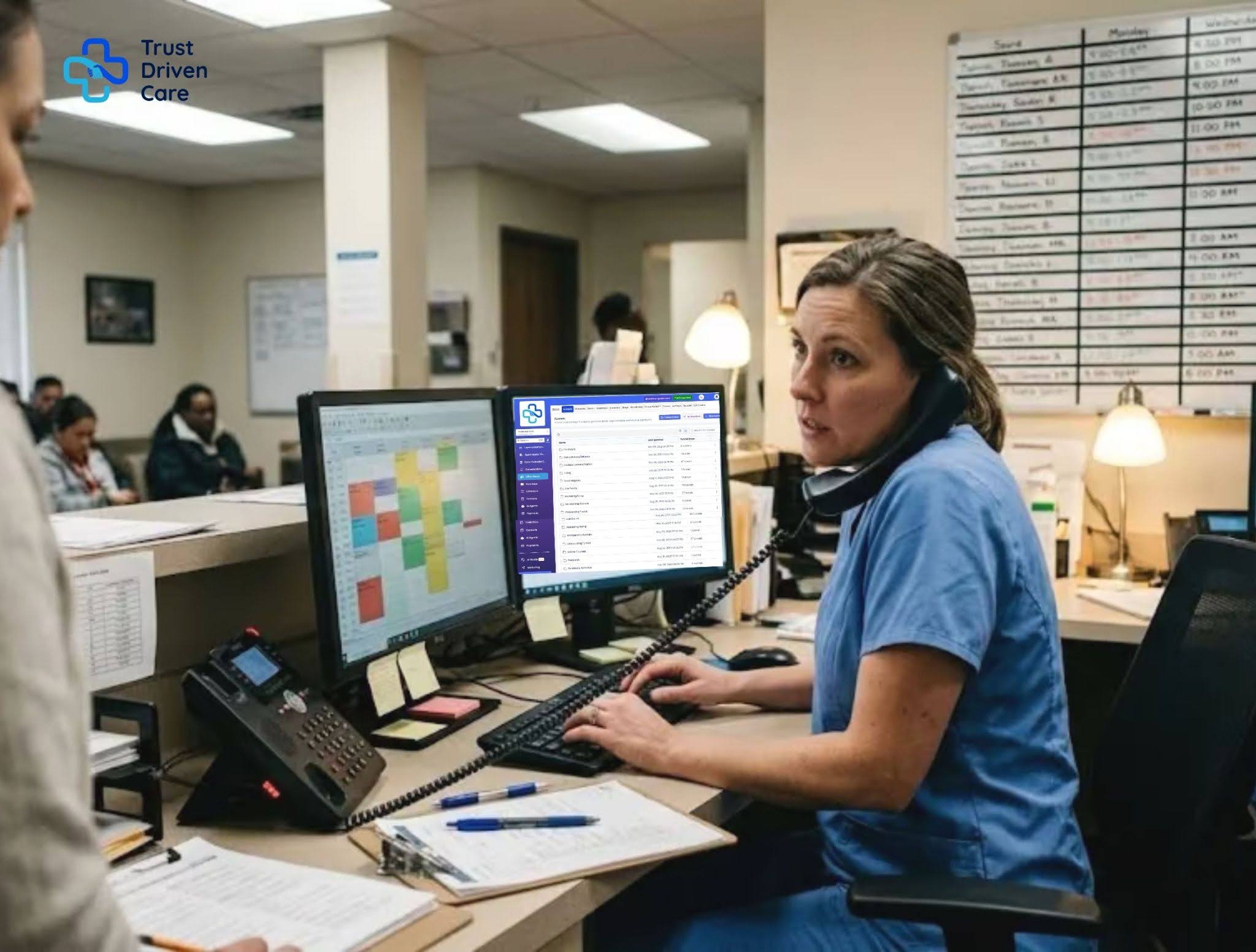
Most healthcare teams don't have a people problem. They have a workflow problem.
After nearly two decades of running a practice, I learned that many of the challenges my team dealt with every day came down to small things: repetitive messages, missed follow ups, appointment reminders, and keeping track of patient conversations.
None of these problems seemed huge on their own. But when they happened every day, they took time away from our team and created gaps in the patient experience.
Research supports this approach. Automating routine administrative tasks can reduce staff workload, improve efficiency, and create more time for direct patient care.
That's where automation can make a difference. The right systems can handle repetitive tasks, keep communication moving, and give your team more time to focus on the patients in front of them.
Looking back, these are four problems I learned we could solve with better automation.
Lesson 1: Repetitive Communication Is Taking Time Away From Your Team
Think about how often your front desk sends the same types of messages every day:
Appointment reminders
Scheduling information
Directions to the office
Requests for paperwork
Follow up messages
Review requests
These tasks are important, but they don't always require someone to manually type and send the same message every time.
Automate Routine Communication
Look at the messages your team sends over and over, like appointment reminders, follow ups, and review requests. These still need to happen, but they don't always need to be sent manually.
TrustDrivenCare takes that repetitive work off your team's plate. It automates routine messages and keeps two way patient texting in one shared inbox, so your team can spend less time managing messages and more time taking care of patients.
Lesson 2: Patients Remember What Happens Between Visits
The patient experience doesn't end when someone walks out of your office. What happens afterward matters too.
Did someone follow up?
Did the patient get the information they needed?
Did they receive a reminder?
Did they feel like your practice was still paying attention?
These small interactions can shape how patients feel about your practice.
Stay Connected With Consistent Follow Up
A simple follow up after a visit can remind patients that your practice is still paying attention, even when your team gets busy.
TrustDrivenCare makes that follow up easier to manage. It can send follow up messages and help re-engage patients who haven't returned, so your team can stay connected without having to remember every message manually.
Lesson 3: Missed Appointments Often Start With a Communication Gap
No shows are frustrating for everyone. Your practice loses time, your schedule develops a gap, and your patient may miss care they actually needed.
But sometimes, the problem isn't that the patient doesn't care about the appointment.
Life gets busy. People forget. Schedules change. Messages get missed.
Make Appointment Communication Easier
A timely reminder gives patients a chance to confirm, reschedule, or ask questions before an appointment is missed.
TrustDrivenCare sends appointment reminders and includes Missed Call Text Back, so patients can still get a response when your team can't answer the phone. Fewer missed messages means fewer communication gaps and a better chance to keep patients on track.
Lesson 4: Inconsistent Communication Can Make a Practice Feel Disorganized
Patients don't see your software. They simply experience the result.
If one patient receives a follow up and another doesn't, communication can feel inconsistent. If messages are spread across different platforms, your team can also struggle to keep track of conversations.
Keep Patient Conversations in One Place
When patient messages are spread across different places, it's easy for something to get missed.
TrustDrivenCare brings two way patient texting into one shared inbox, so your team can see conversations and respond from one place. That makes it easier to keep track of patients and give them a smoother experience.
What TrustDrivenCare Can Do for Your Clinic
We've talked about how automation can solve everyday communication problems. But that's only one part of what TrustDrivenCare can do.
It also gives you a clearer view of what's happening in your clinic, so you can make better decisions and find opportunities to grow.
1. Keep Patient Communication Moving
TrustDrivenCare helps automate the routine communication that can take up so much of your team's time, including reminders, follow ups, review requests, and patient reactivation.
Your team spends less time managing messages and more time taking care of patients.
2. See What's Happening in Your Clinic
The TrustDrivenCare dashboard gives you a clearer view of your clinic's activity and performance.
You can track what's happening, see your clinic's profitability, and use that information to spot areas that may need attention.
Instead of guessing, you have data to help you make better decisions.
3. Find More Opportunities to Grow
Growth doesn't always mean finding more new patients. Sometimes the opportunity is already in your existing patient base.
TrustDrivenCare can help you identify patients who may be ready to return, improve follow up, and make better use of the relationships you've already built. That's the bigger role automation can play in a practice.
It's not just about saving your front desk time. It's about helping your clinic communicate better, see what's happening, and find opportunities to grow.
Now It's Your Turn
Whether you're new to automation or already using TrustDrivenCare, look for one area you can improve.
Review your workflows. Find a repetitive task that still takes too much time.
Improve your automation. Check your reminders, follow ups, missed call texts, and review requests.
Check your dashboard. Look at your clinic's activity, performance, and profitability.
Find growth opportunities. Look for patients you can reconnect with and ways to improve follow up.
Small improvements can give your team more time, improve the patient experience, and help your clinic grow.
The goal isn't to automate everything. It's to make your practice work better.
See what you can improve in your practice with TrustDrivenCare.
References
Crossing the Quality Chasm. Crossing the Quality Chasm: A New Health System for the 21st Century. National Academies Press; 2001.